Our technology
We draw information out of the footage you already have. At Beacon’s core is SD-Retinex, a low-light enhancement method we designed ourselves, with its paper and code openly published.
01Pipeline
Designed to run from capture to report, on site.
Beacon works with any capture device. It processes the footage you already have on an existing PC — no GPU required.
- 01
Capture
Bring in footage
Feed in footage from existing cameras, drones, sewer TV cameras, ROVs or archived recordings as is.
- 02
Enhance
Recover the dark
SD-Retinex corrects brightness, contrast and color, revealing detail buried in the dark.
- 03
Detect
Find anomaliesIn development
Anomaly candidates such as rust, leaks, cracks and foreign objects are extracted from the enhanced footage.
- 04
Explain
Explain & recordIn development
Ask a question in plain language and Beacon explains the candidates and their evidence, ready for the inspection record.
Enhancement with SD-Retinex runs offline on the on-site PC, so footage can stay inside your organization — no cloud required. Detection and explanation are being built to run on site too.
02SD-Retinex
A stable Retinex method designed
around the sigmoid derivative
SD-Retinex enhances low-light images without training data and without a GPU. It reinterprets our earlier method, XCR, through a single principle — the derivative of the sigmoid — and substantially improves both stability and image quality.
No training
No training data or model weights. Validation can start right away, before any customer images are collected.
Fast on a CPU
Separable filtering with O(N) work per pixel. A 600×400 image takes about 18 ms on a single thread.
Holds back highlights
A bounded sigmoid tone map keeps the output in the 0–1 range, so bright areas do not blow out.
Low color error
A ΔE00 of 15.90, the lowest among the training-free methods tested, keeps color shifts small in images kept as inspection records.
Explainable behavior
Parameters with a clear meaning, such as the strength of illumination compensation (β), let you adjust results and explain why.
Reproducible
The same input and parameters always produce the same result — well suited to audits and inspection records.
Three mechanisms
- 01
Real-axis sigmoid-derivative kernel
Illumination is estimated with the sigmoid derivative σ′(z) = σ(z)(1 − σ(z)) sampled on the real axis. The kernel is smooth and pole-free and behaves stably as its radius and slope (N, a) change. Separable filtering keeps the cost at O(N) per pixel.
- 02
Naka–Rushton-type tone map
A bounded sigmoid with the same form as the Naka–Rushton equation for photoreceptor response lifts brightness. Replacing the earlier method’s fixed gain cap with this tone map alone raises PSNR from 8.78 dB to 16.47 dB (+7.7 dB) and cuts ΔE00 from 34.1 to 15.9 (paper ablation).
- 03
Noise-adaptive gain
Contrast amplification is reduced where local variation is high, reducing how much the noise typical of dark footage is exaggerated.
03Examples
Examples
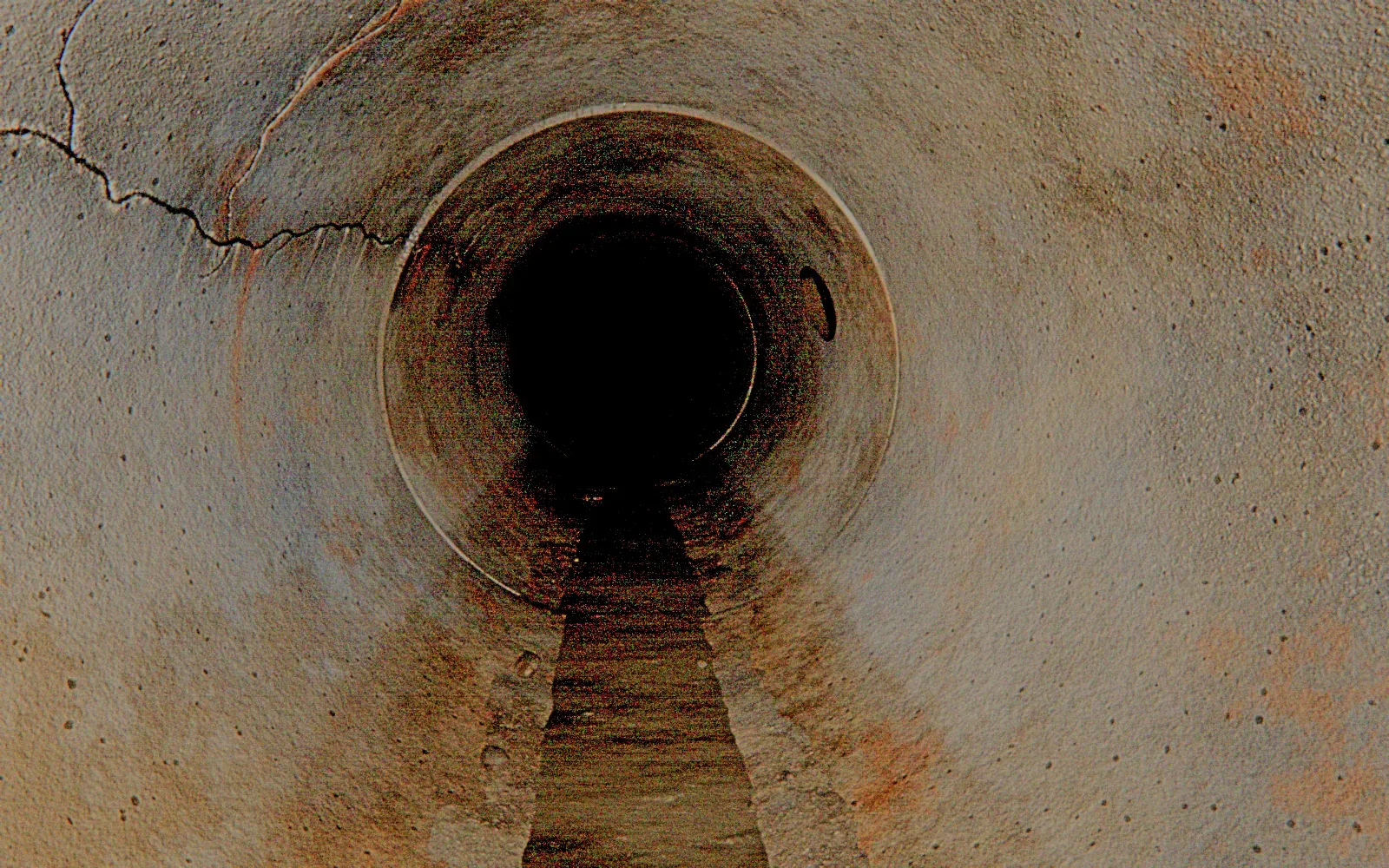
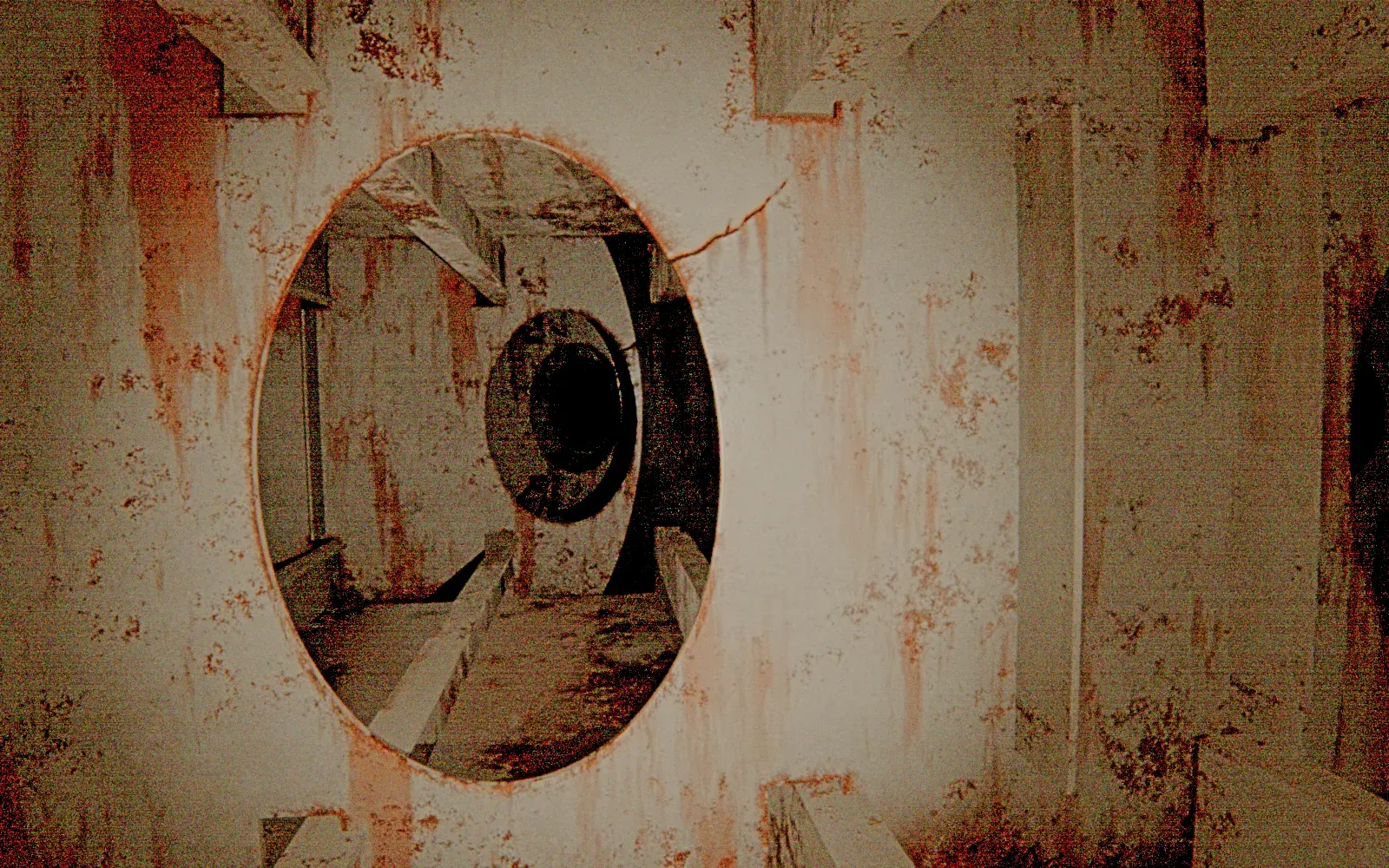
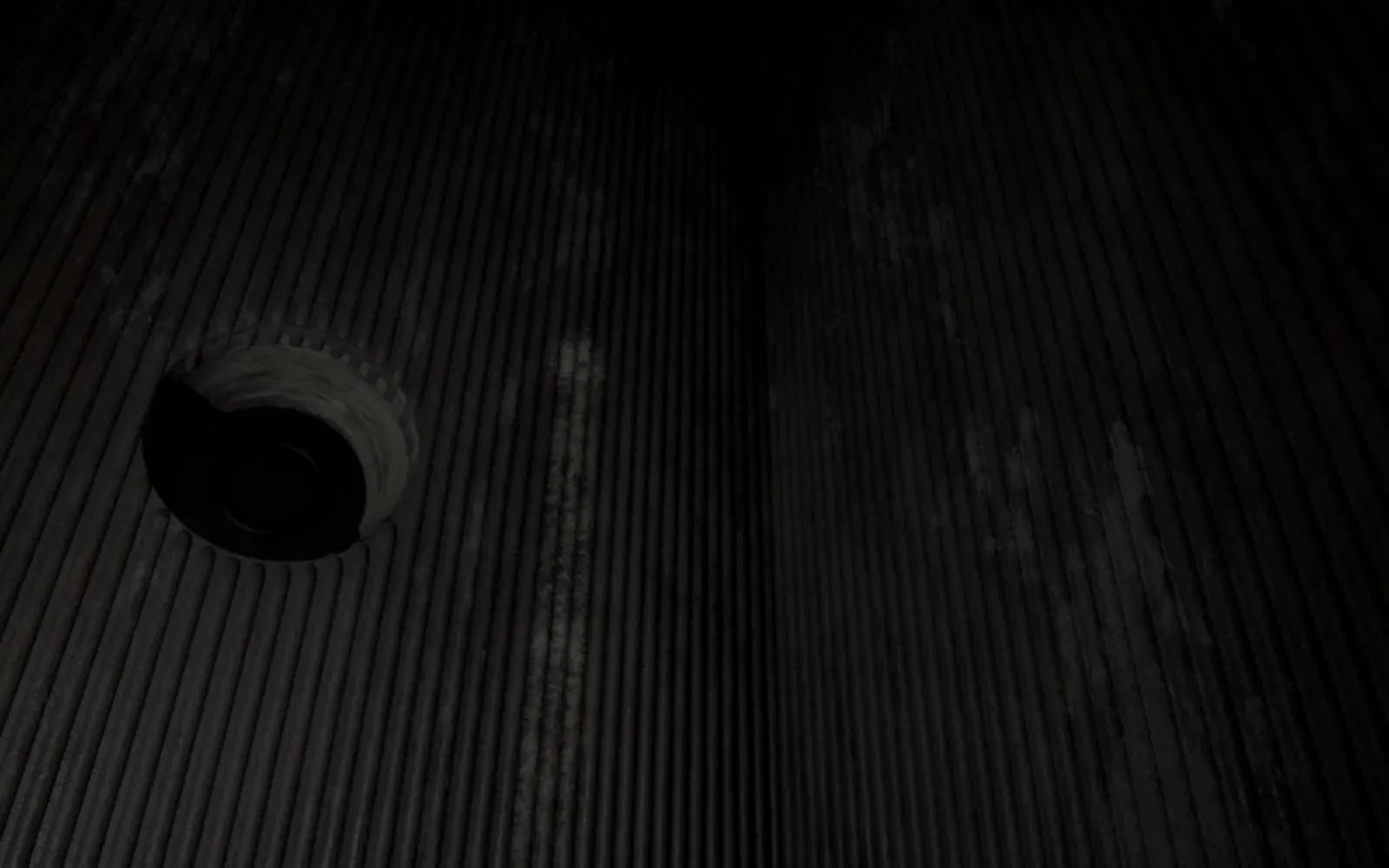
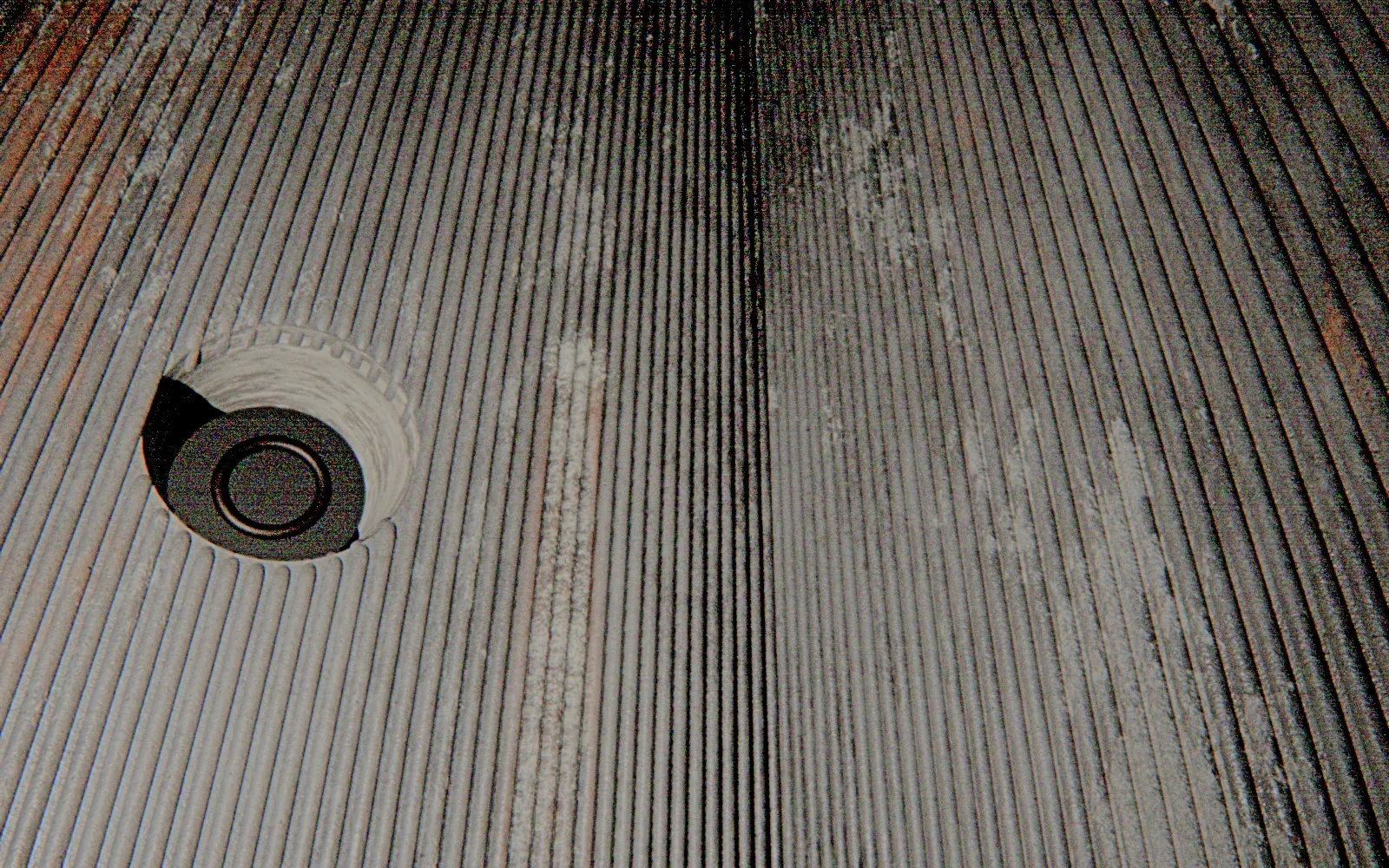
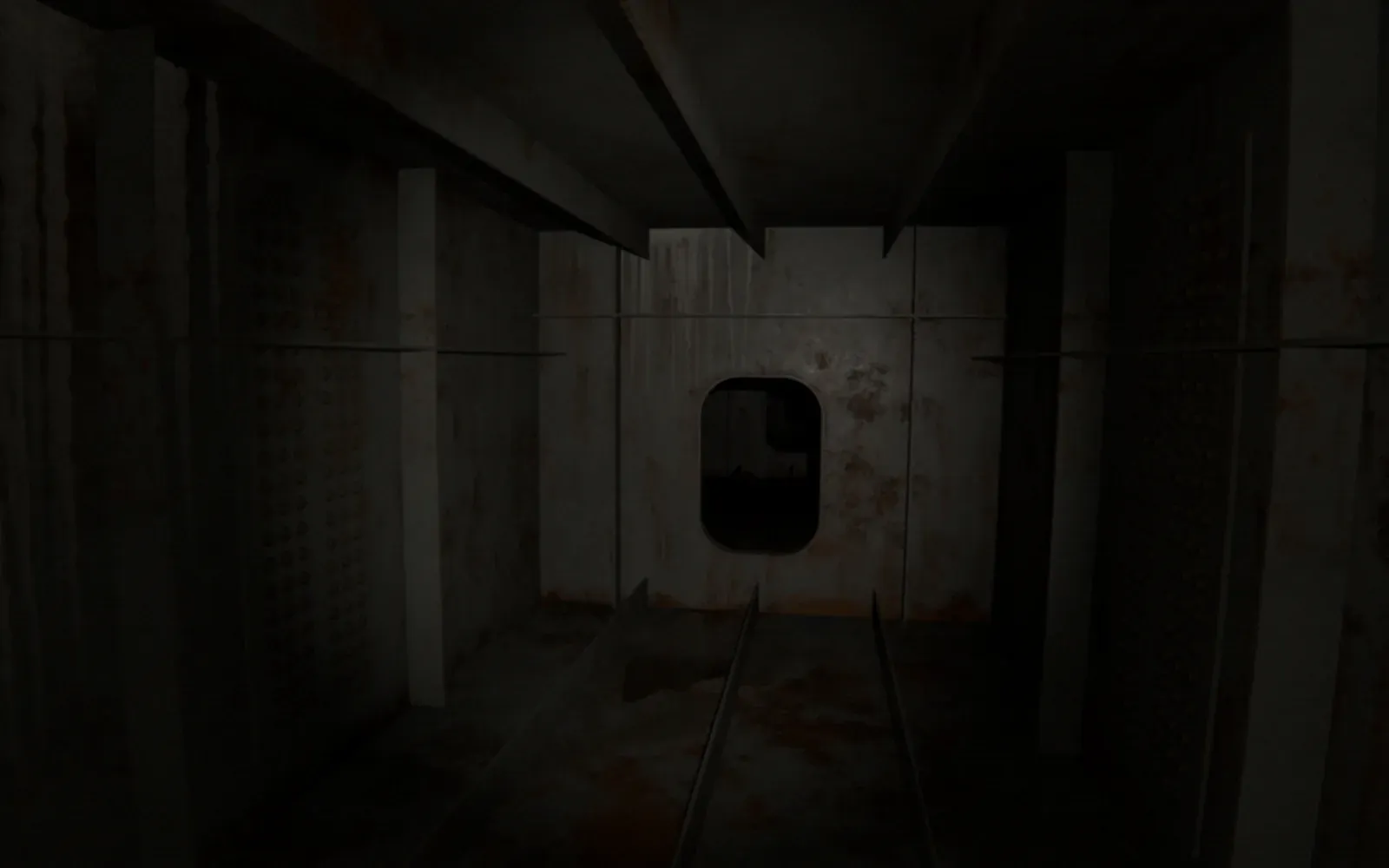
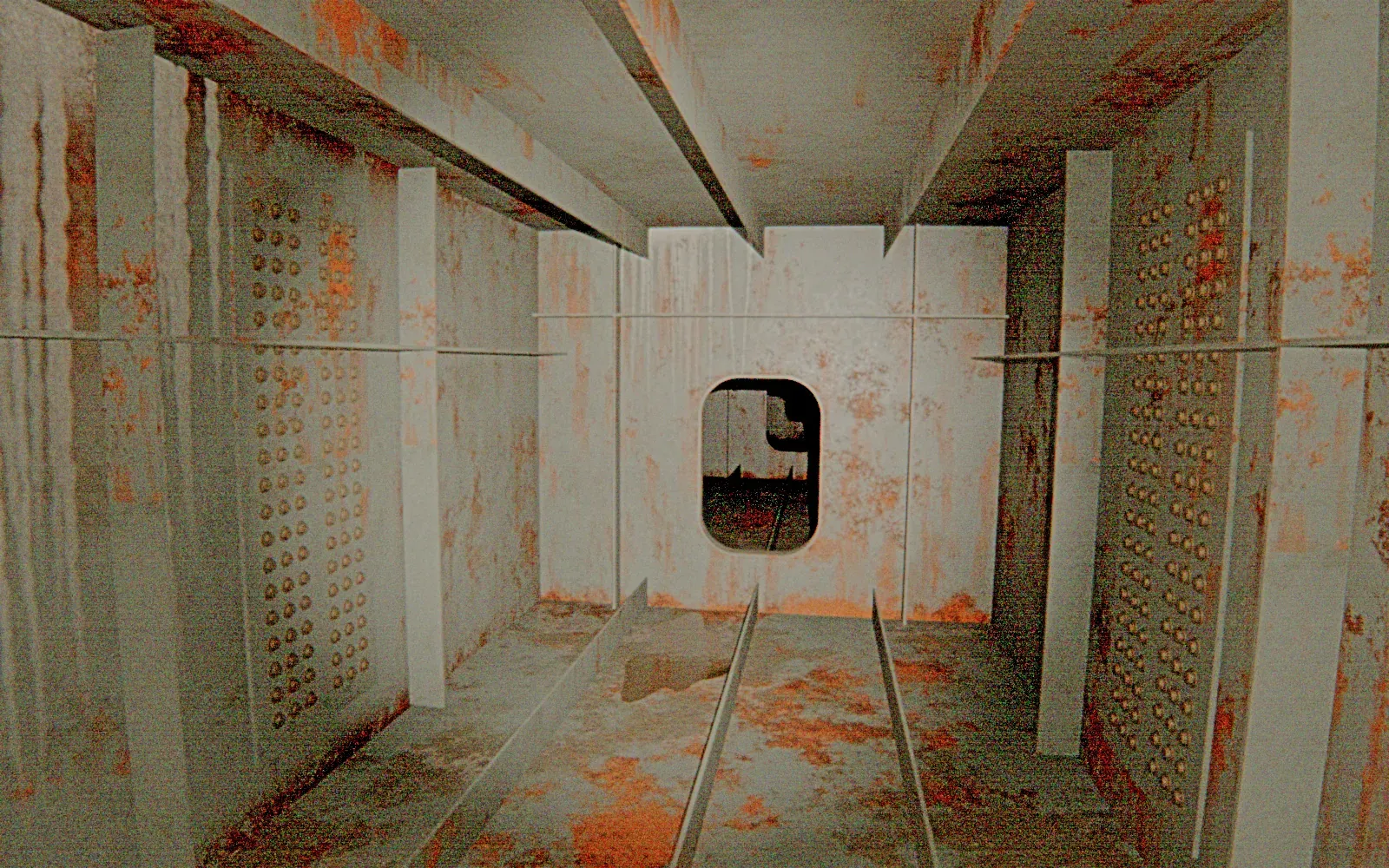
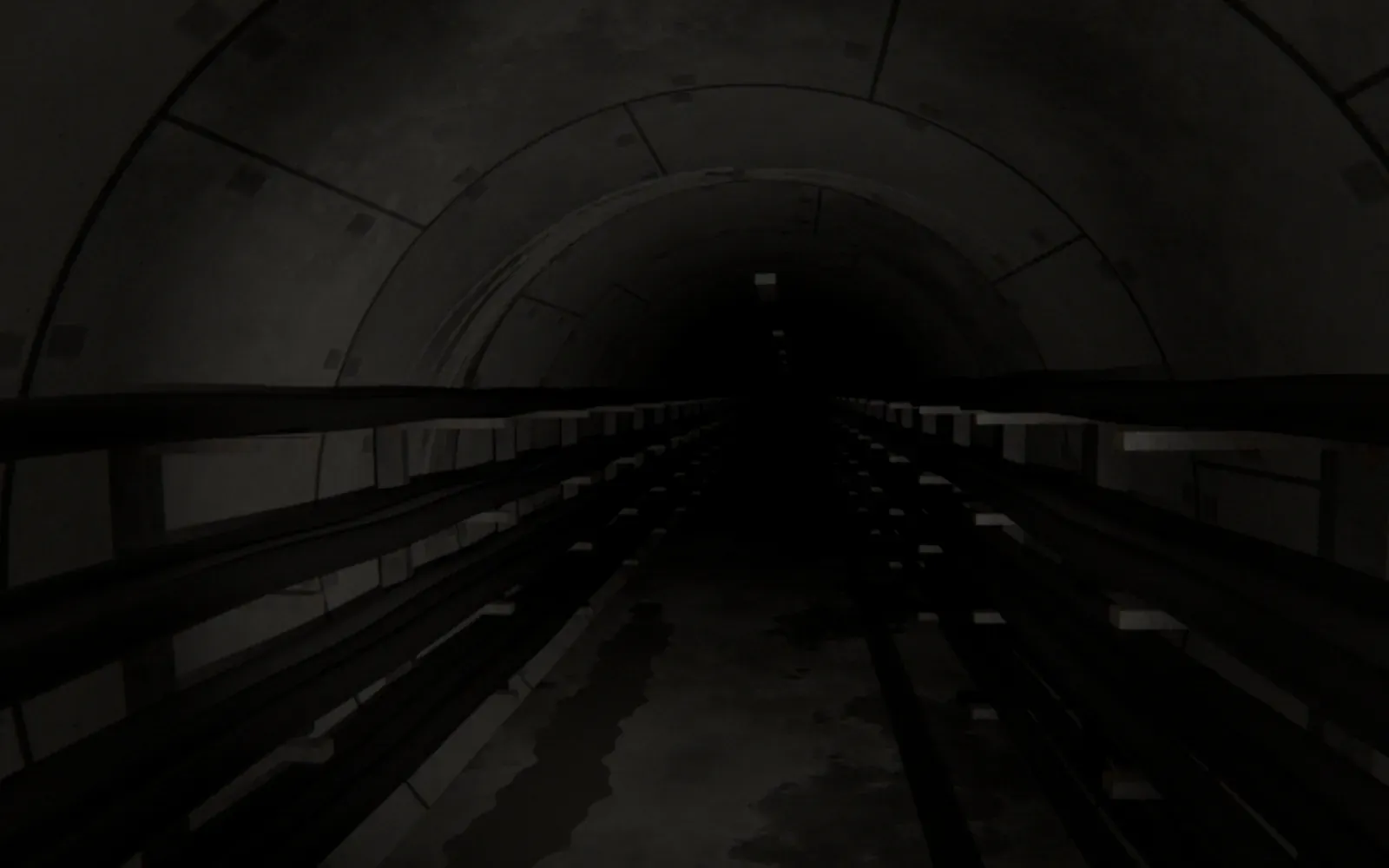
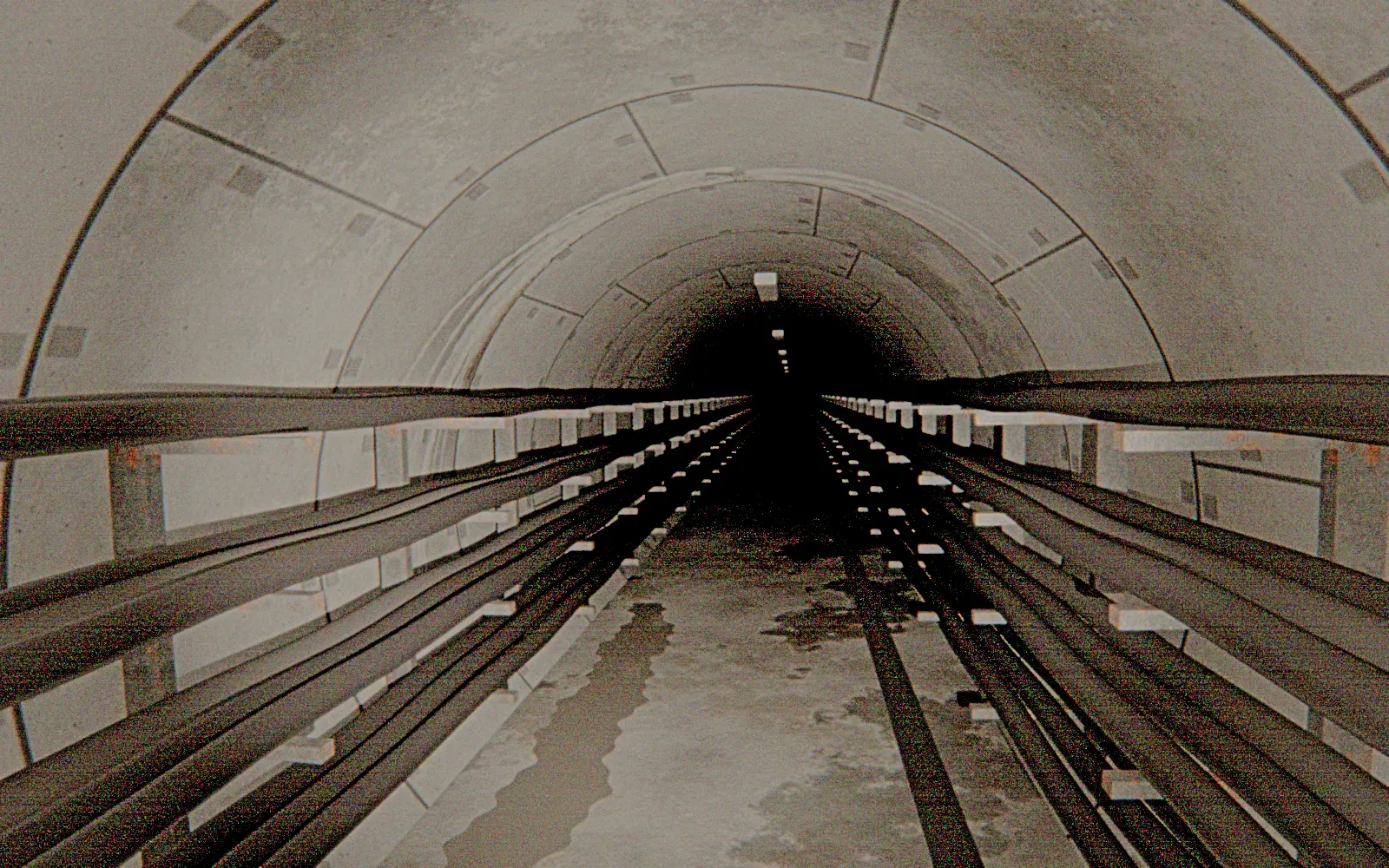
SD-Retinex applied with its default parameters to CG reconstructions of dark inspection scenes, with simulated camera sensitivity and noise. Use the slider to compare before and after. Images are compressed for the web.
04Benchmark
Evaluation on a public benchmark
On LOL (15 evaluation pairs), a widely used public low-light benchmark, every method was scored with the same evaluation code. Among the training-free methods tested, SD-Retinex is best in PSNR, color error and runtime — and, without training or a GPU, it also outperforms the deep-learning models Zero-DCE and SCI in PSNR and color error.
PSNR
16.47dB
Highest among the training-free methods tested
Color error ΔE00
15.90
Lowest among the training-free methods tested
Speed (18.41 ms per image)
54FPS
Fastest among the training-free methods tested
| Method | PSNR (dB) ↑ | ΔE00 ↓ | Runtime (ms/image) ↓ |
|---|---|---|---|
| No processing | |||
| Input (no processing) | — | ||
| Training-free, CPU | |||
| SSR | 151.01 | ||
| MSR | 604.31 | ||
| LIME-like | 31.84 | ||
| XCR | 24.36 | ||
| SD-Retinex | 18.41 | ||
| Pretrained deep models (zero-reference) | |||
| Zero-DCE | GPU | ||
| SCI | GPU | ||
Source: T. Okugawa, “SD-Retinex: A Stable Retinex Method for Low-Light Image Enhancement Designed Around the Sigmoid Derivative,” Zenodo, 2026 (Table II). SSR, MSR and LIME-like are the repository’s implementations; LIME-like is a simplified LIME that estimates illumination by Gaussian smoothing. Runtime: AMD Ryzen 7 8840U, Windows 11, Python 3.11, OpenCV 4.13, single thread, 600×400, median of 7 runs after a discarded warm-up, for comparison within this table. Zero-DCE and SCI were run as pretrained models on a GPU (Google Colab) and scored by the same evaluation code. The paper reports all metrics, including SSIM, LPIPS and NIQE, and comparisons with paired-trained deep models.
Consistent gains across three datasets
On all three public paired datasets, SD-Retinex improves on its predecessor XCR in PSNR, SSIM and color error (paper, Table III).
| Dataset | Method | PSNR (dB) ↑ | SSIM ↑ | ΔE00 ↓ |
|---|---|---|---|---|
| LOL eval1515 pairs | XCR | 9.83 | 0.403 | 30.91 |
| SD-Retinex | 16.47 | 0.487 | 15.90 | |
| LOL our485 subset100 pairs | XCR | 8.13 | 0.308 | 35.66 |
| SD-Retinex | 14.60 | 0.396 | 19.39 | |
| BrighteningTrain100 pairs | XCR | 15.00 | 0.688 | 17.60 |
| SD-Retinex | 17.14 | 0.756 | 12.32 |
05Lineage
Research lineage
Beacon’s technology grew out of a series of studies that began in 2025.
2025.11
FSSR
Jxiv
Proposes a fast Single-Scale Retinex and evaluates real-time skeleton detection in low-light environments.
DOI: 10.51094/jxiv.1897(opens in a new tab)2025.11
XCR
Jxiv
A Retinex method that estimates illumination with a separable kernel derived analytically from the complex exponential. Processes 1080p video at an average of 15.32 FPS on a CPU alone (measured on a Snapdragon X PC).
DOI: 10.51094/jxiv.1961(opens in a new tab)2026.06
SD-Retinex
Zenodo
A training-free, CPU-only low-light enhancement method built on the sigmoid derivative, with a pole-free real-axis kernel and a bounded tone map. Best PSNR and lowest color error among the training-free methods tested on LOL eval15.
DOI: 10.5281/zenodo.20945211(opens in a new tab)
Open Research
Open code and evaluation results.
The reference implementation is released under the MIT license, and the figures and metric tables under CC BY 4.0. Anyone can reproduce our results with the same evaluation code — the foundation of trust in our technology.
Default parameters (12)
All defaults were fixed in advance from the design principle, not tuned on any test images.
| Symbol | Role | Default |
|---|---|---|
a | Kernel slope | 0.5 |
N | Kernel radius | 20 |
β | Illumination compensation | 0.6 |
k_base | Global contrast | 1.4 |
c | Sigmoid center | −1.0 |
φ_min, φ_max | Renormalization anchors (black, white) | −8, 2 |
w | Noise window | 7 |
σ_noise | Noise scale | 0.04 |
p | Roll-off | 2 |
s_sat | Saturation | 0.8 |
ε₀ | Illumination floor | 10⁻³ |
ε_c | Luma floor | 10⁻⁴ |
Cite (BibTeX)
@misc{okugawa2026sdretinex,
  author    = {Okugawa, Toma},
  title     = {{SD-Retinex}: A Stable Retinex Method for Low-Light Image Enhancement Designed Around the Sigmoid Derivative},
  year      = {2026},
  publisher = {Zenodo},
  doi       = {10.5281/zenodo.20945211},
  url       = {https://doi.org/10.5281/zenodo.20945211}
}Product
Beacon software
Built on SD-Retinex, it takes dark inspection footage from “seeing” to “finding and explaining.” We are developing inspection-support software that runs on the PC already on site.
In development
Fully offline
No internet connection needed — works even in air-gapped environments.
Runs on existing PCs
Designed to run on the PC you already use — no GPU required.
Hardware-agnostic
Cameras, drones, ROVs, even archived footage — any capture device works.
Ask in plain language
We are building a feature that answers “Is there any rust?” by pointing to candidates and explaining why.